
Nkasa Linyanti: A Sense of Place & Solitude
‘I said to the village headman, you stop poaching, and we’ll build a lodge that will offer jobs, salaries and careers’.
It’s loosely paraphrased, but that was the gist of my conversation with one of Nkasa Linyanti’s co-founders and owners, a good few months before Natural Selection opened its latest lodge where it did. Beneath a sausage tree on a wooded ‘island’ on a vast floodplain separated from Botswana by the region’s signature Linyanti’ swamps’, aka the Kwando delta.
Nkasa Linyanti is deep towards the southernmost edge of Namibia’s Nkasa Rupara National Park, in Zambezi province. It is roughly a three hour-thirty road-trip from Kasane, the border with Botswana.
‘Zambezi’ province was until earlier this year known as the Caprivi Strip, named after the colonial German governor of what was then German South-West Africa. Given the Germans particularly brutal conquest and rule of the territory*, which included the Herero and Nama Genocide of 1904–1908 – widely regarded as the first genocide of the 20th century – I suppose it is not surprising.
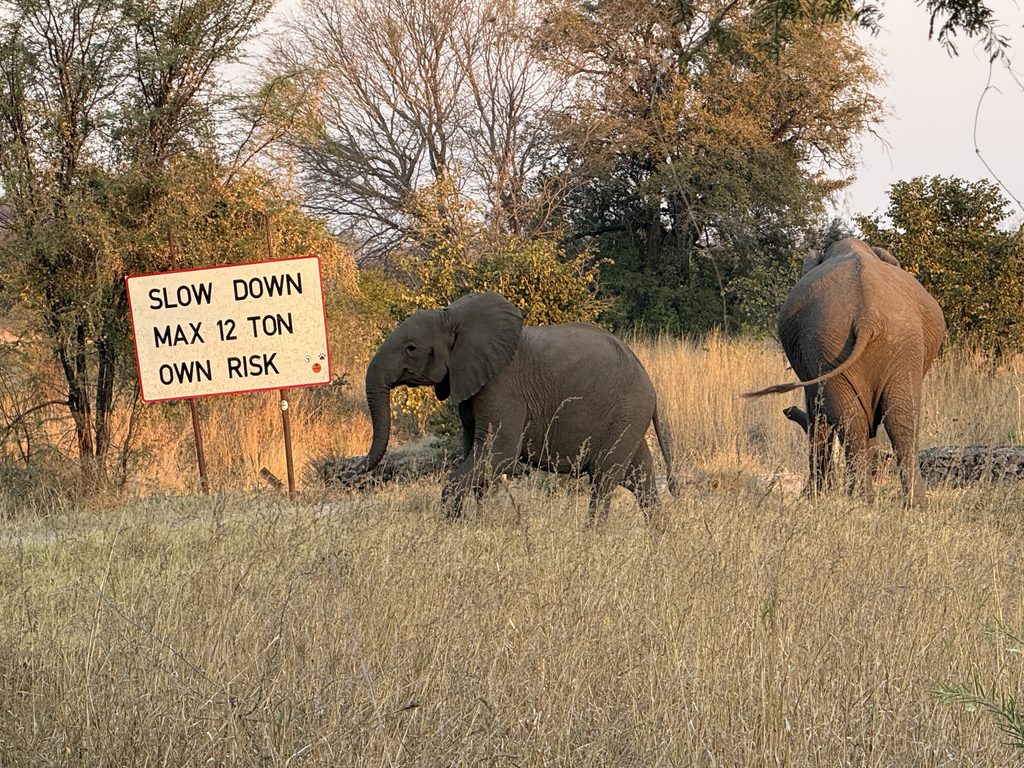
My road transfer from Kasane was one of the most entertaining I’d had in a while. Having left Zambia’s Kafue National Park by road in the dark that morning, for the last stretch of the journey the driver and I were accompanied by the day’s early September sunset glow on the dead-quiet road south to the lodge.
Having become far too familiar with the bland and uniform motorways of the Netherlands, this road was alive with life. Extra spice was added by my pleasant young driver explaining why he thought the world was flat.
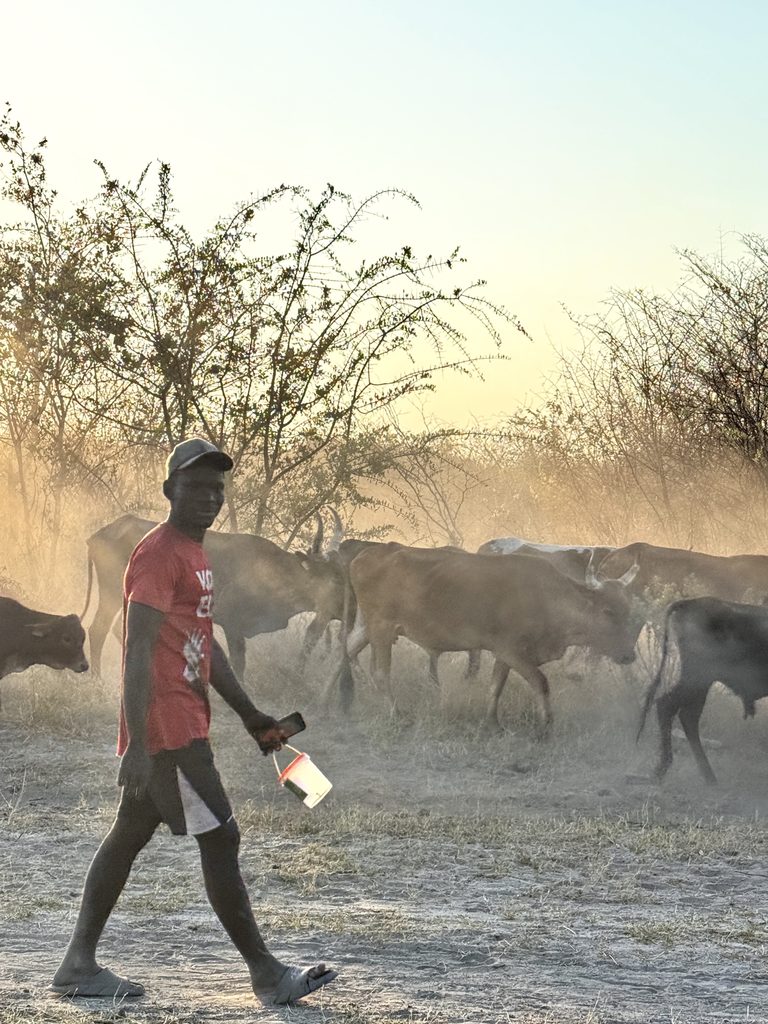
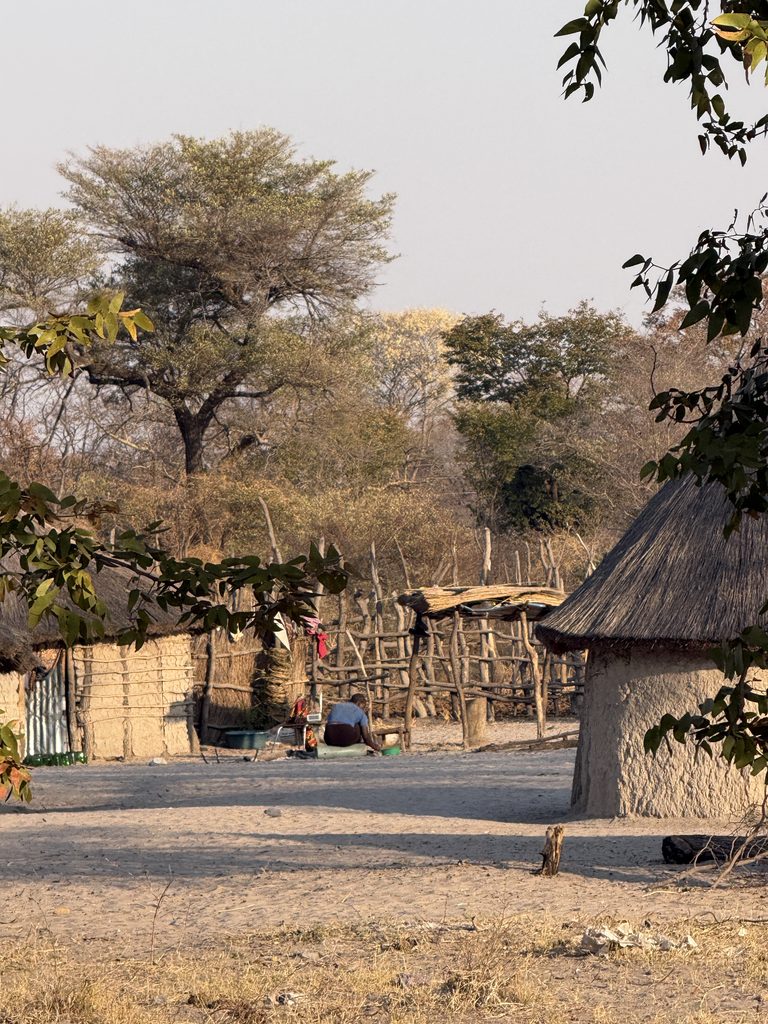
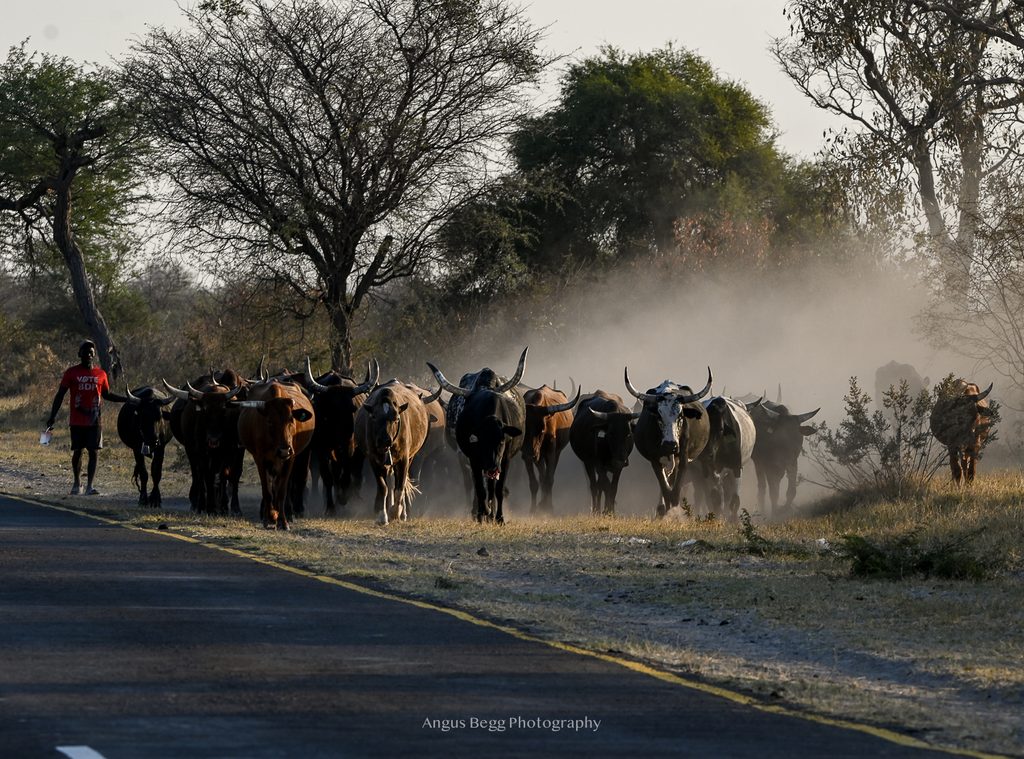
A herd of Nguni cows was being herded ‘home’, two boys were playing soccer on a sand pitch and a couple of women were pounding millet, in a real scene borrowed from a mythical medieval village called Sangwali. Repeat visitors to Africa come for this….otherness…almost as much as the wildlife.
Just beyond Sangwali I was handed over to Elias Viyani, my guide at the new Nkasa Linyanti. ‘The lodge is close’, said my friendly flat-earther, knowing my journey had been long. ‘Um, it’s 90 minutes’, said Elias with a guilty smile. ‘But we have snacks, and it’s pretty much a game drive through the park’.
We passed elephants, gave a lift to a Wildlife and National Parks (DWNP) field ranger, stopped for a nightjar and its chick in the road, and a porcupine in the dark.
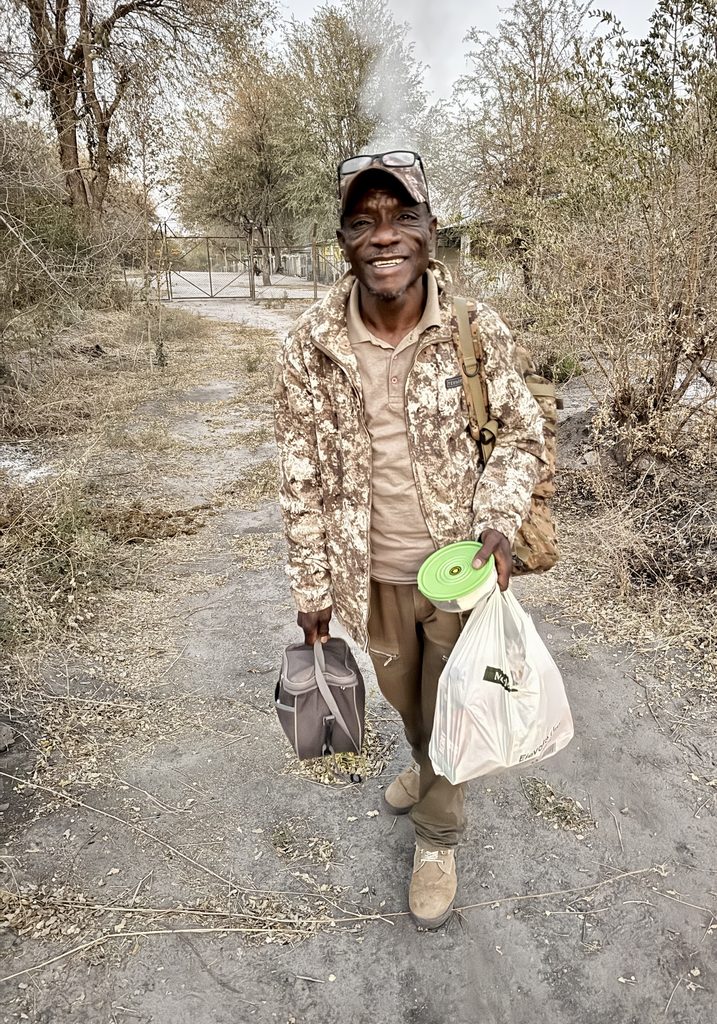
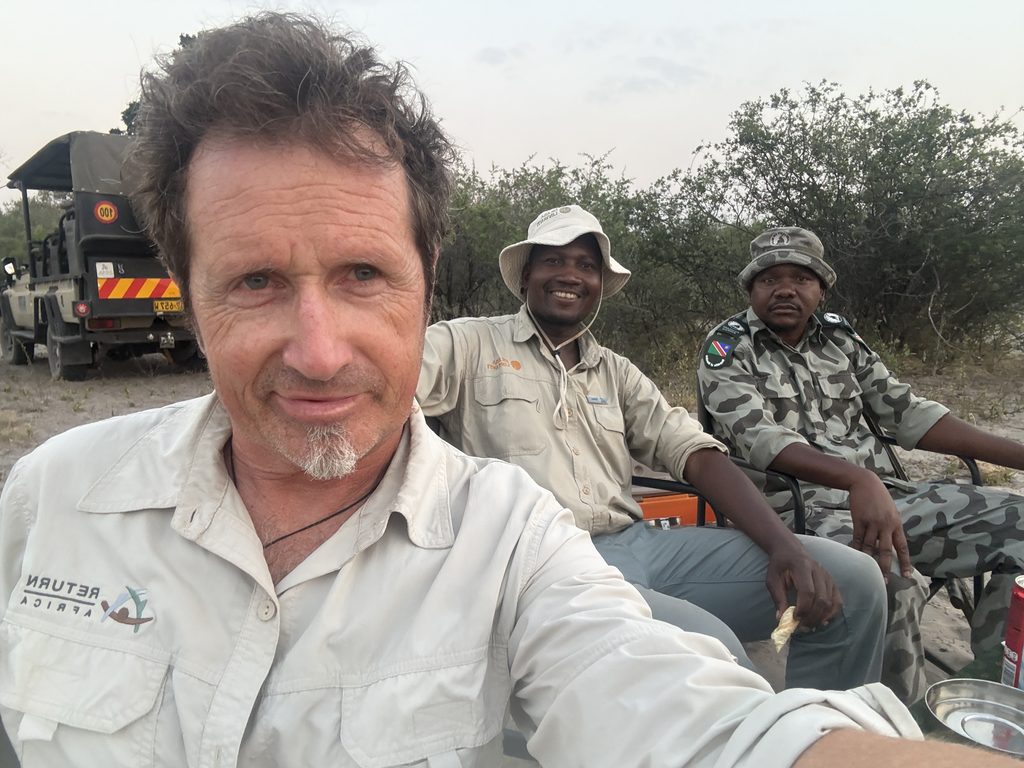
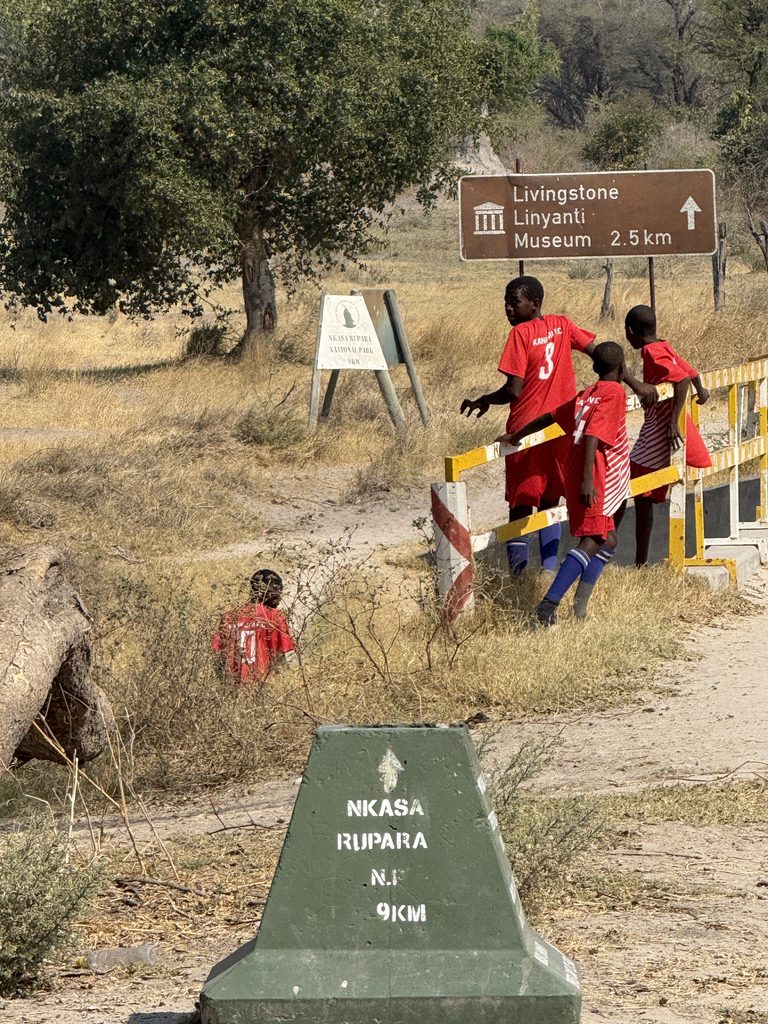
And I got to know Elias, who’d be my guide for the next two days. I may have been exhausted after 14 hours travelling by road and air, but I have a deep relationship with ‘the Caprivi’, and I’d been curious about this new lodge in a new park, only the second premium lodge in this northern strip of Namibia. I was running on adrenalin, appreciating the visual excitement being offered to my senses – and we hadn’t even reached the lodge (!)
So ja, the journey was a little magical. That’s what happens on safari. Everything fades away when waking up to the magic of yet another day in Africa. Not just for lodge guests, but for me too.
In the perfect world I’d wake up next to my partner, and take in the world, stretching its limbs and singing itself awake, with coffee and a rusk on the deck of the tent. But I had limited time and work to do. So Elias was the first person I saw instead, as we set out in search of a waking day and the rising sun.
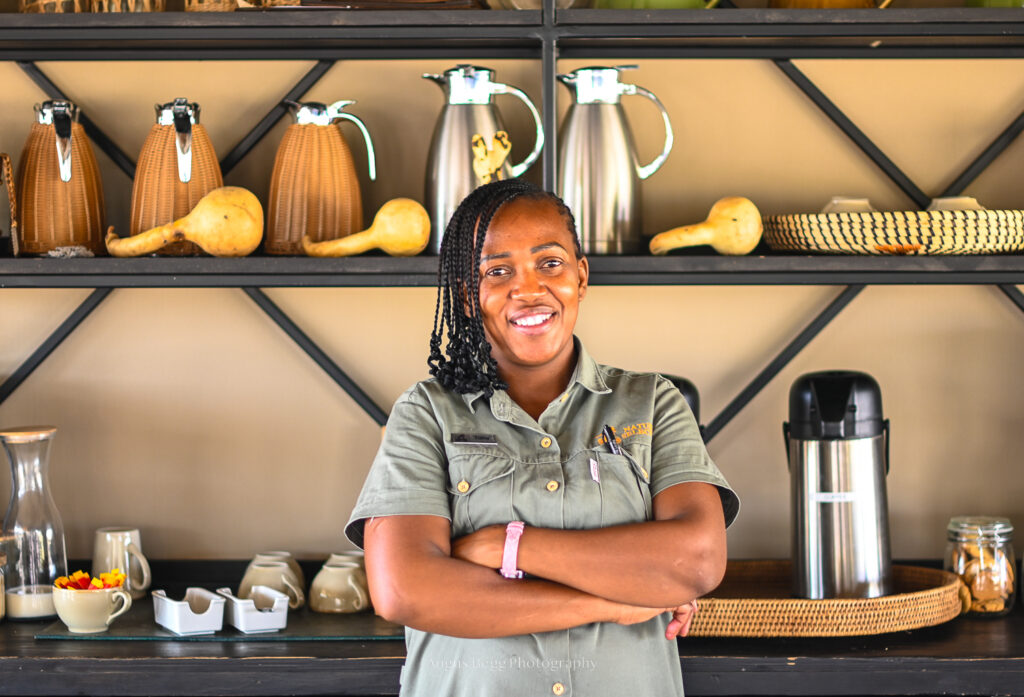
Toiny Mulife welcomes and waits on guests. Classic example of lodge creating employment opportunities and conservation awareness.
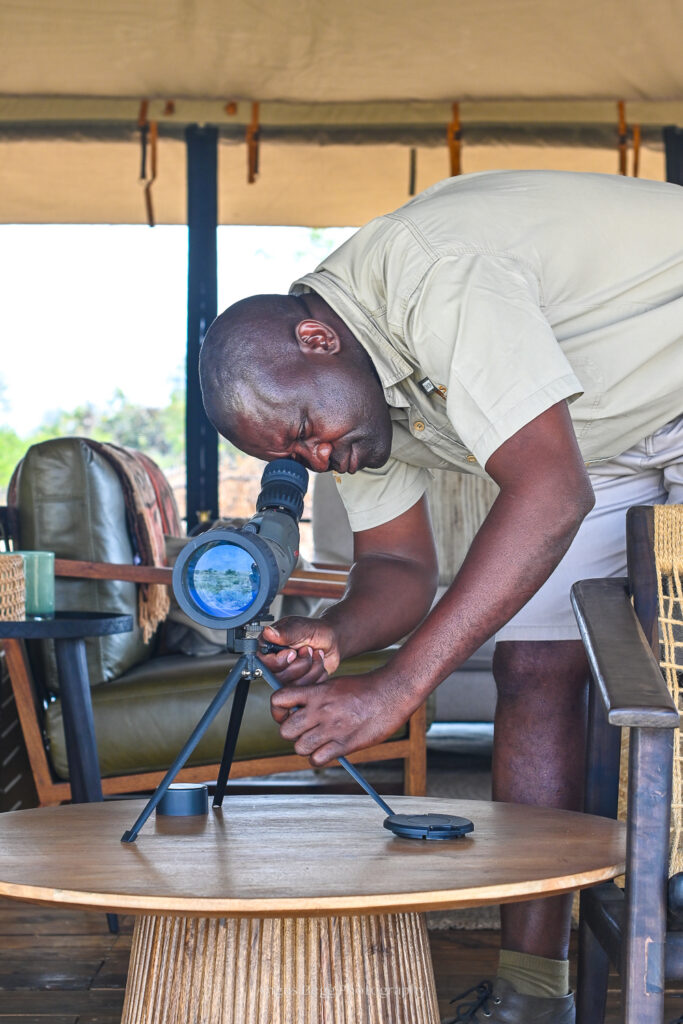
Simon Swenyeho. An avid birder.
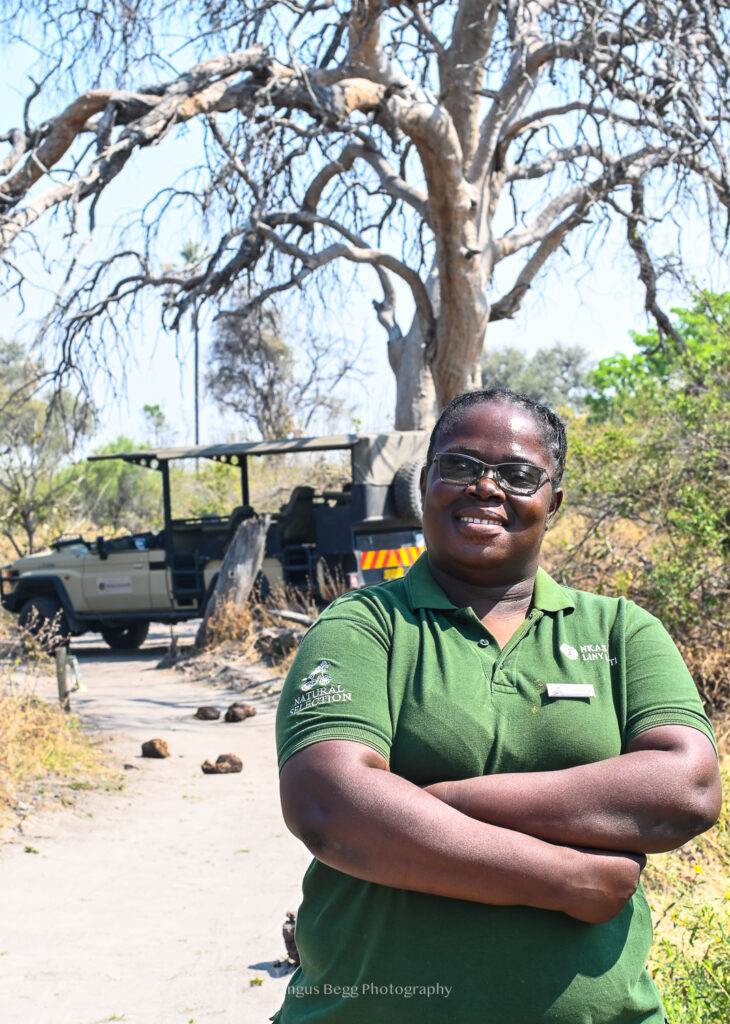
After exploring the landscape I returned for a proper, daylight introduction to the lodge. Sariety welcomed me, and while serving me breakfast Toiny Mulife explained how she’d never been so close to animals, but was loving this, her first real job.
‘That elephant who walks through camp, George, yoh, at first I was scared, but now I understand. But I’m still scared’. She explained how her parents were both Christian; her mother an evangelical Lutheran from Ovamboland, as are ‘99% west of Kavango’. Her father is Bayeyi, the dominant tribe in the Okavango delta, which is physically connected to these Linyanti ‘swamps’ (in fact this part of Namibia would’ve been part of Botswana if the English hadn’t given it to the Germans in a colonial swap before the 1WW). Everyone has a story.
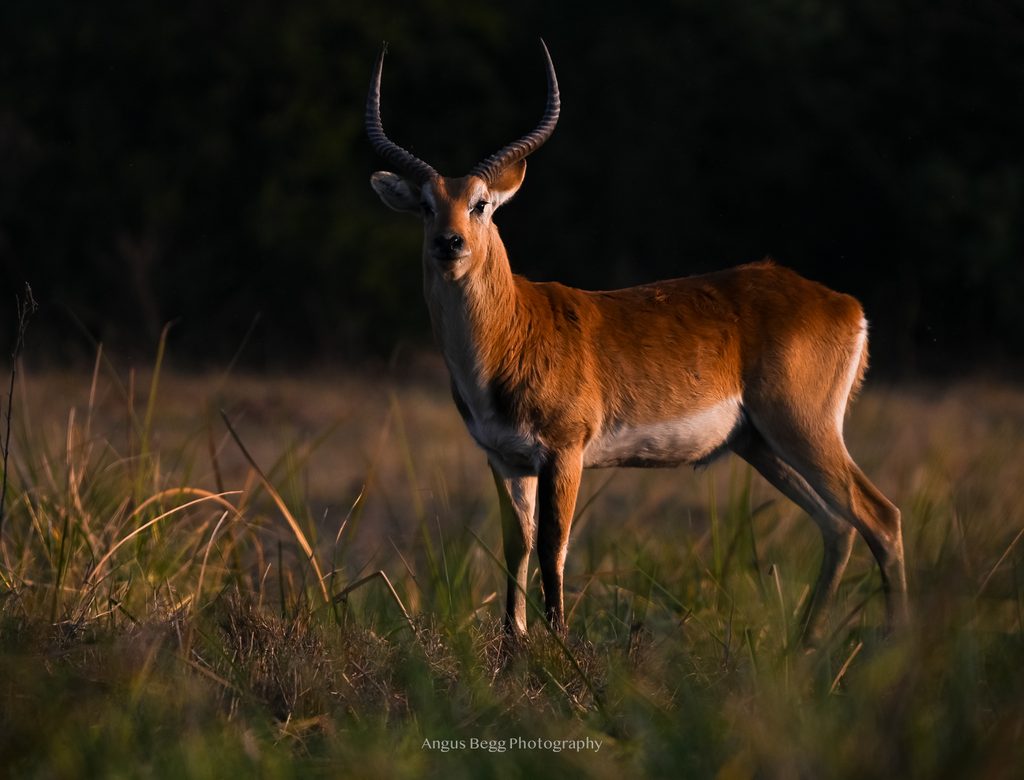
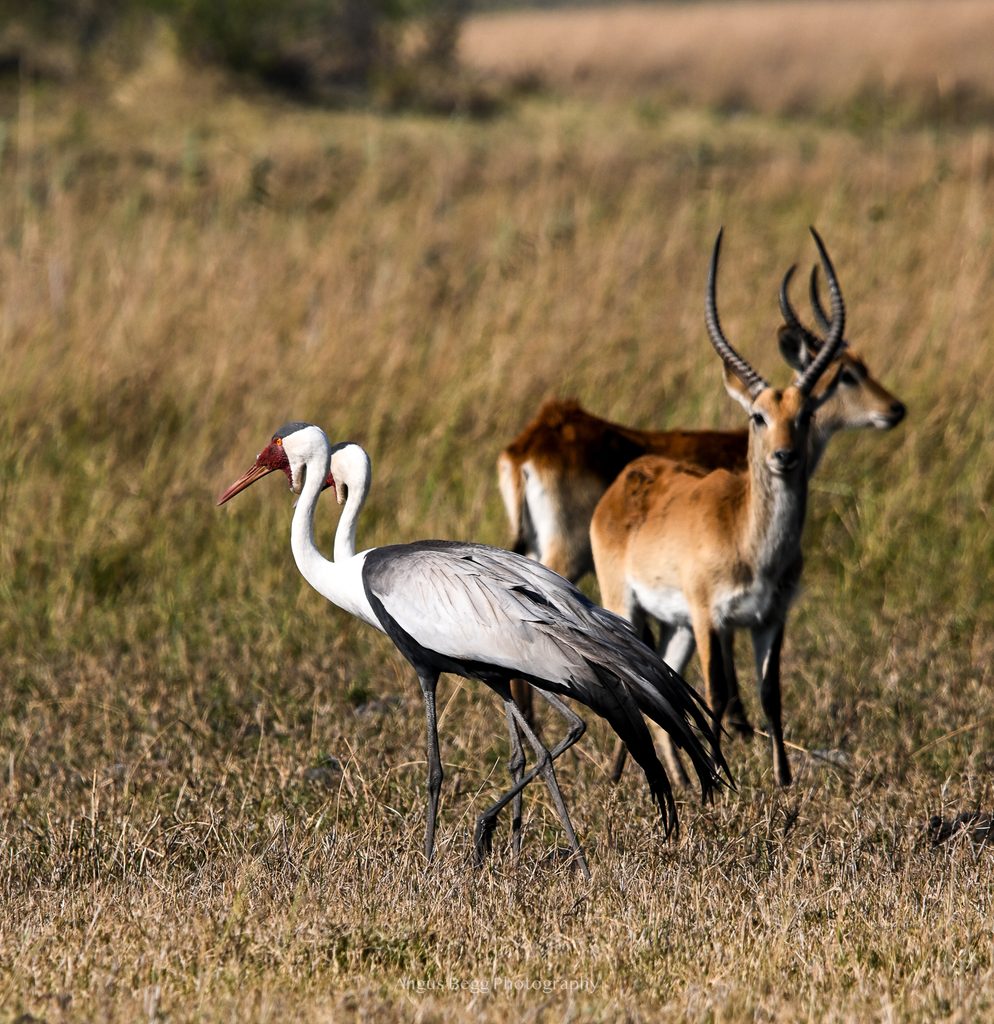
And mine was focused on the wildlife. Wattled Cranes, the most threatened of them all thanks to vanishing grasslands, danced with red lechwe, which have quite suddenly replaced the Sable as my favourite antelope. That’s because of their design; their adapted hooves, and their shape while running, their powerful and longer hind legs causing them to lean forward. Beautiful adaptations to the wetland environments in which they were born to live.
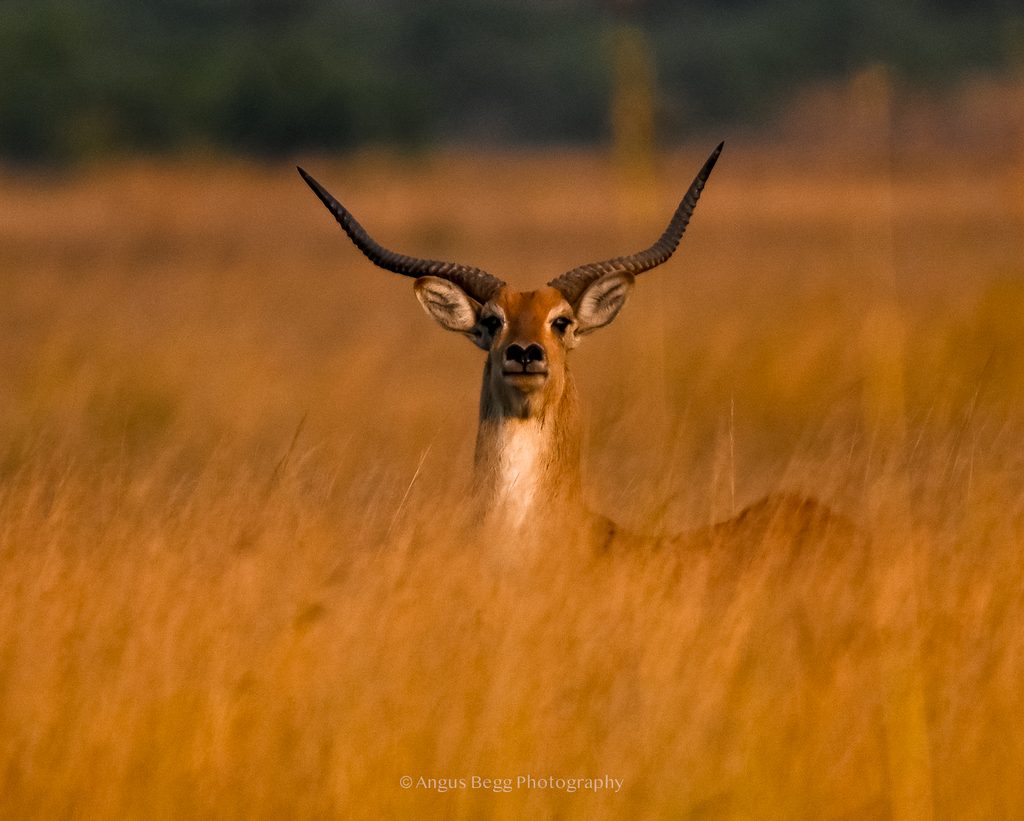
We followed this male red lechwe while walking. He was fleeing the victor in a dominance contest.

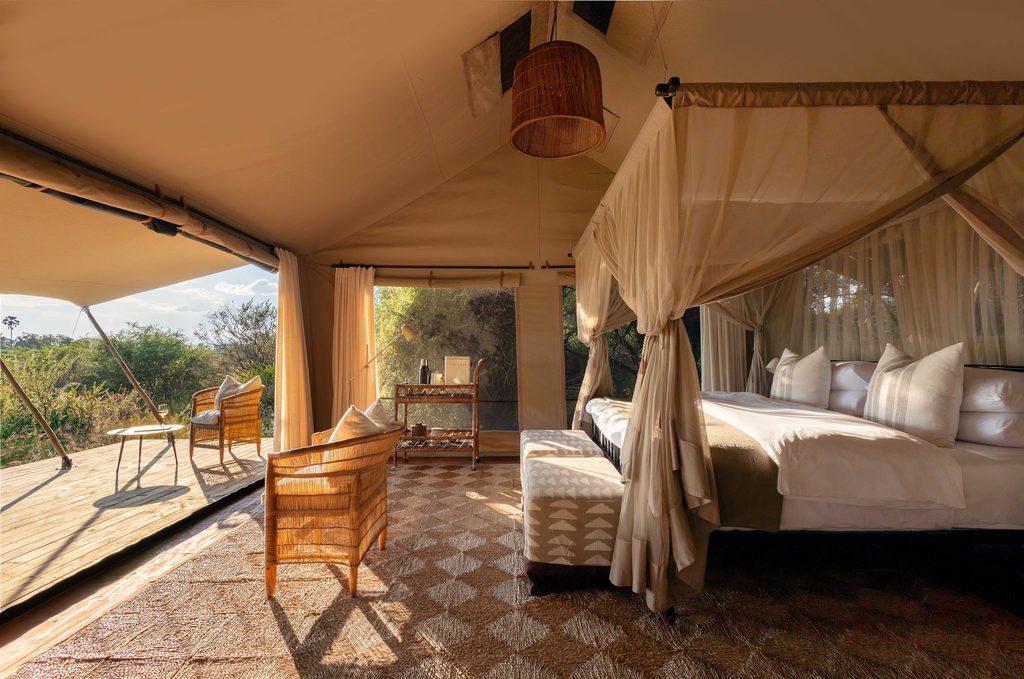
And the accommodation. I was in tent 6, the end of the line. Down the dirt path and around a corner past the magnificent Sausage tree (xigelia africa) and a relative forest of Jackalberrys and Leadwoods, I heard / felt George (the elephant) rubbing against my tent.
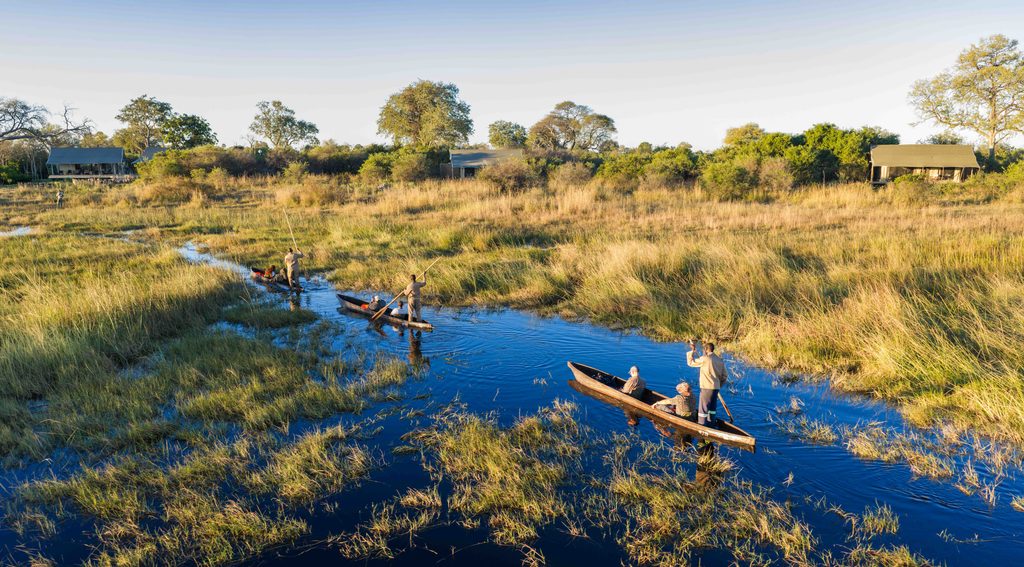
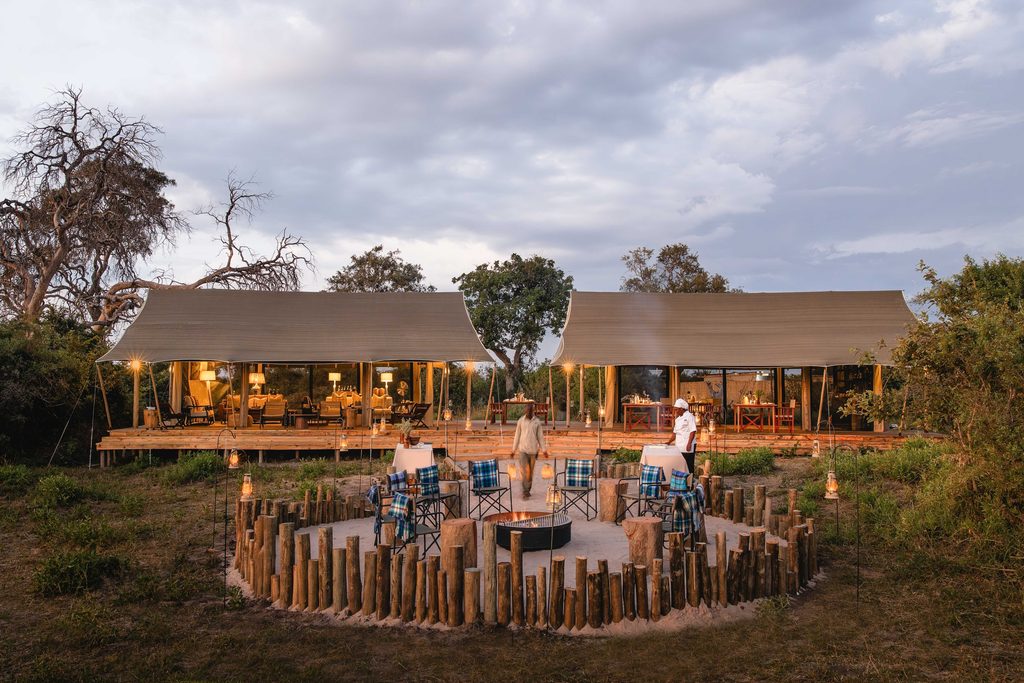
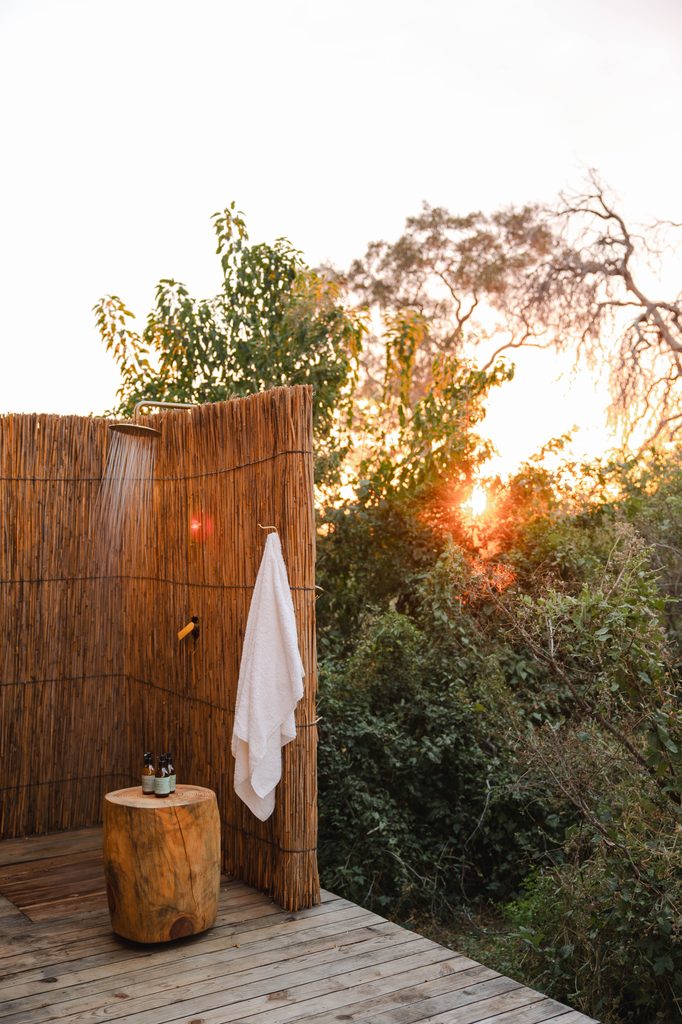
And yes, there is a pool, for the hot summer months, looking out at its own floodplain. –
*Look out for Tony Park’s riveting historical drama, ‘Ghosts of the Past’.