
A New Safari Frontier
There’s a new safari frontier in town, stirring in the sands of that place known by most as Namibia’s Caprivi Strip. However context is everything, so let me take you back a bit.
Named after governor Count Leo von Caprivi , who ruled the then German colony in the late 19th century, it remains the most bizarre colonial construction. Summarized in brutal fashion, it happened something like this.
The colonial ‘scramble for Africa’ was at its zenith, and Chancellor Bismarck’s imperial Germany was already bossing it (with immense cruelty, it must be said) over South-West Africa (Namibia) and Tanganyika (Tanzania). He wanted Zanzibar too, which to him made geopolitical and geographical sense.
The scramble was really on. As Portugal, Belgium, Sweden, Denmark, Spain and France also vied for their pieces of Africa, Germany wanted to extend its reach from Namibia to the Indian ocean via Tanganyika. Britain’s Queen Victorian objected, but as she already had Bechuanaland (Botswana) at the Berlin Conference in 1890 she agreed to swap Zanzibar for what is today the Strip.
Thus the long and narrow Strip between Botswana and the Zambezi river – geographically, clearly looking like part of Botswana – belongs to Namibia.
Linguistically, Zambia’s Lozi tongue is common. Militarily, the Strip – until about 1992 – was the scene of a relative battleground between American-backed apartheid South Africa on the one hand, and the Soviet-supported Angola and Namibian independence movement on the other.
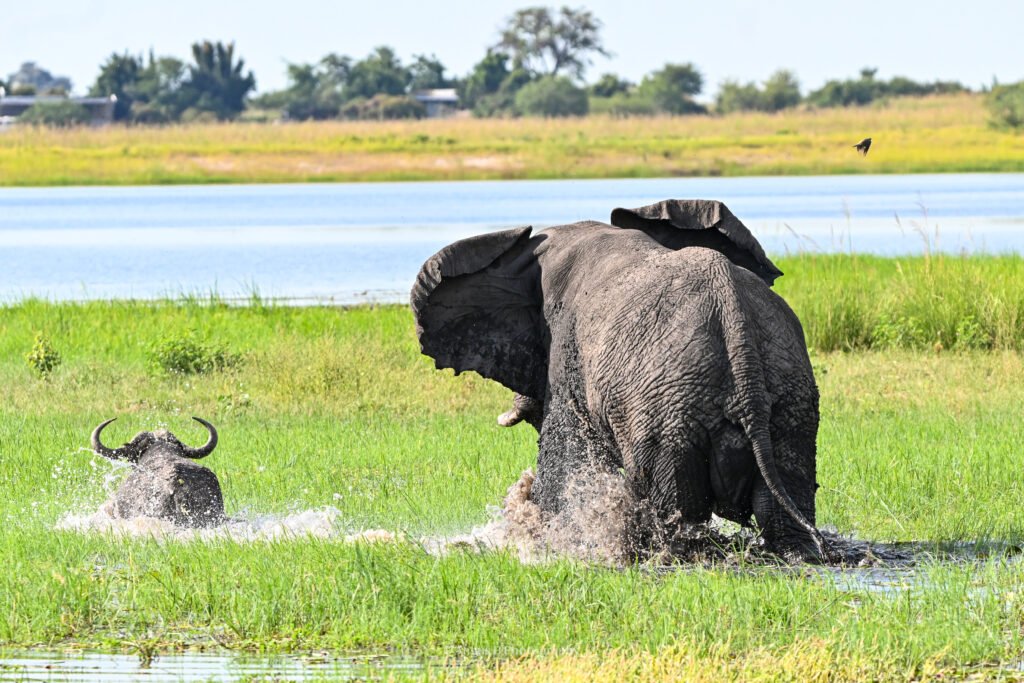
For almost thirty years it’s been peaceful. I recall highly traumatized elephants in Namibia’s Bwabwata National Park (in 1992), moving in large herds and trumpeting loudly at the sight of a vehicle (they’d been shot by both sides for their ivory). At the park’s signature Horseshoe Bend lagoon in March, I came across content elephants striding across a grassland our guide said had once been a shooting range.
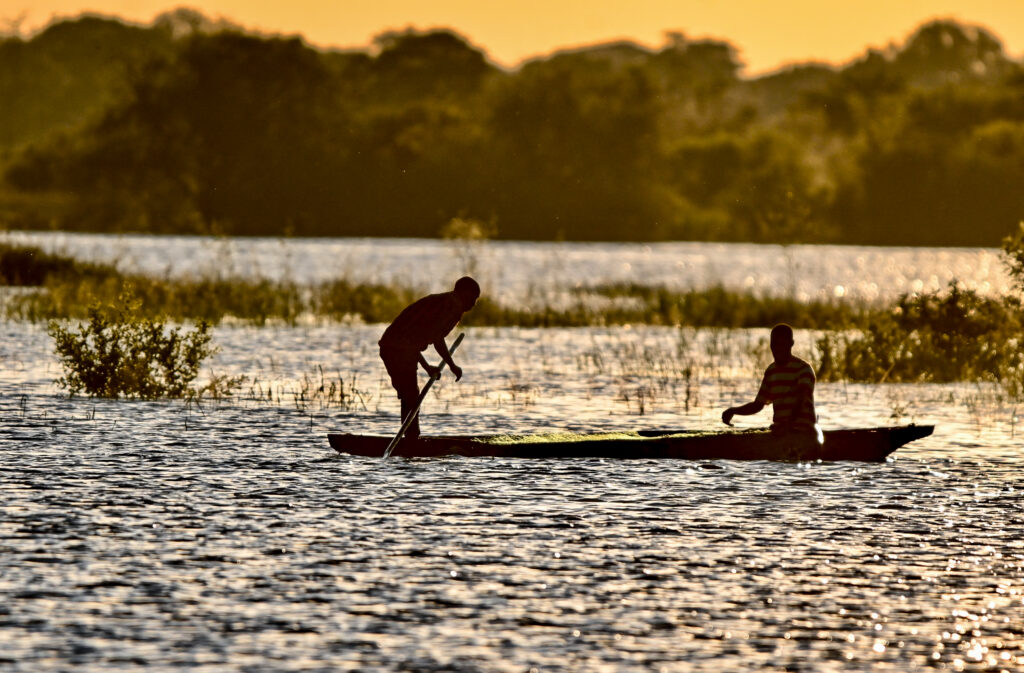
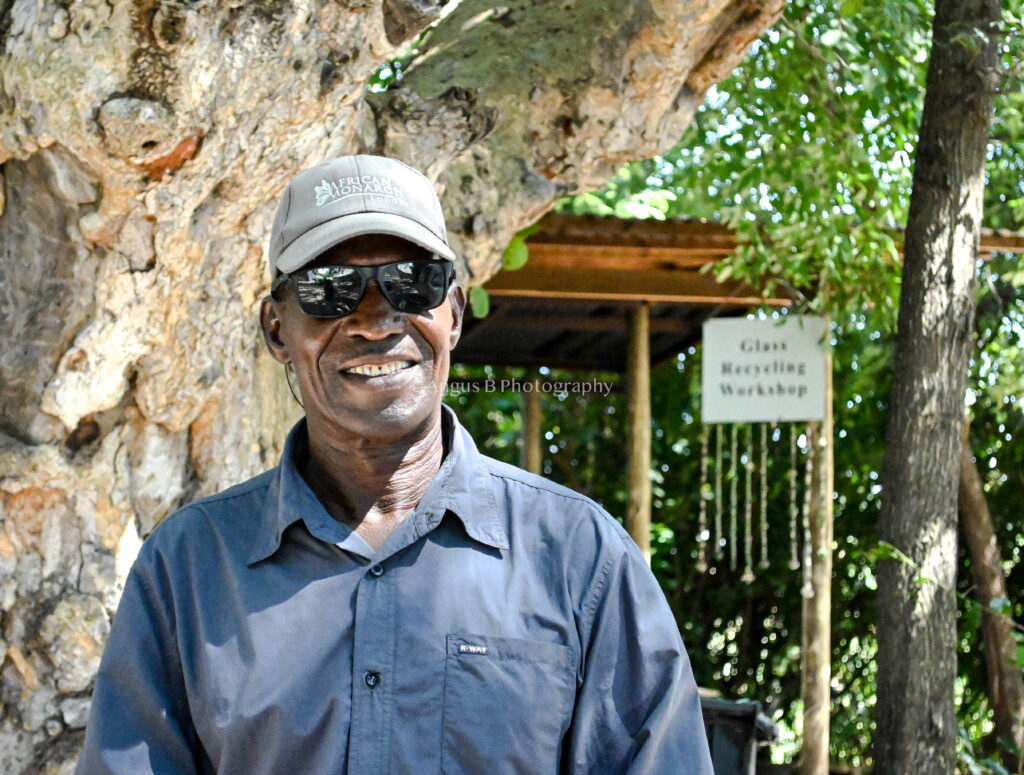
He’d been a soldier back then. He pointed out the metal rungs in a massive mahogany that they’d used to climb to their treehouse observation post. Just like he and the once-threatened wildlife have been given a second chance to embrace this landscape for good, so Bwabwata and neighbouring parks like Nkasa Rupara – dominated by surrounding floodplains and waterways – are once again flourishing.
https://www.facebook.com/profile/589269075/search/?q=CAPRIVI (March 22 ’25)
Even the large Angola of mountains, rivers and immense natural resources, is slowly stirring. Dragged along by the Kavango-Zambezi tourism initiative (KAZA) – involving countries connected by the two major rivers, those being Namibia, Botswana, Zambia and Zimbabwe – with its formerly Marxist rulers no longer in power, the country is open for business other than oil and diamonds. Overland tourist camping expeditions report vast herds of buffalo and sable (and we all know what follow those herds).
Namibia’s Bwabwata and Nkasa Lupala National Parks will soon be on the safari industry and travellers’ sun-dried lips as a place worth exploring.
The wildlife numbers aren’t yet as significant as the core parts of the Okavango Delta, but the birdlife, the quality of sightings, and the unrivalled spatial exclusivity, are a world apart. And in a region where tourism is seen by locals as ‘the only game in town’, some of these lodges boast amongst the most significant and far-reaching community programmes in southern Africa.
‘The Okavango experience without Botswana prices’ says one luxury lodge owner. I was just happy I found Sensodyne toothpaste in the pharmacy at Katima Mulilo (which an English travel-writer colleague said she couldn’t even find in Bath, Somerset).
Count von Caprivi’s plan ended up being blocked by Victoria Falls and the Germans sent packing as part of their defeat in the First World War. Colonial ugliness aside, Namibia today will be pleased it has riverside safari seats on the Zambezi, Kavango, Linyanti and Kwando rivers, the most significant rivers in the region.
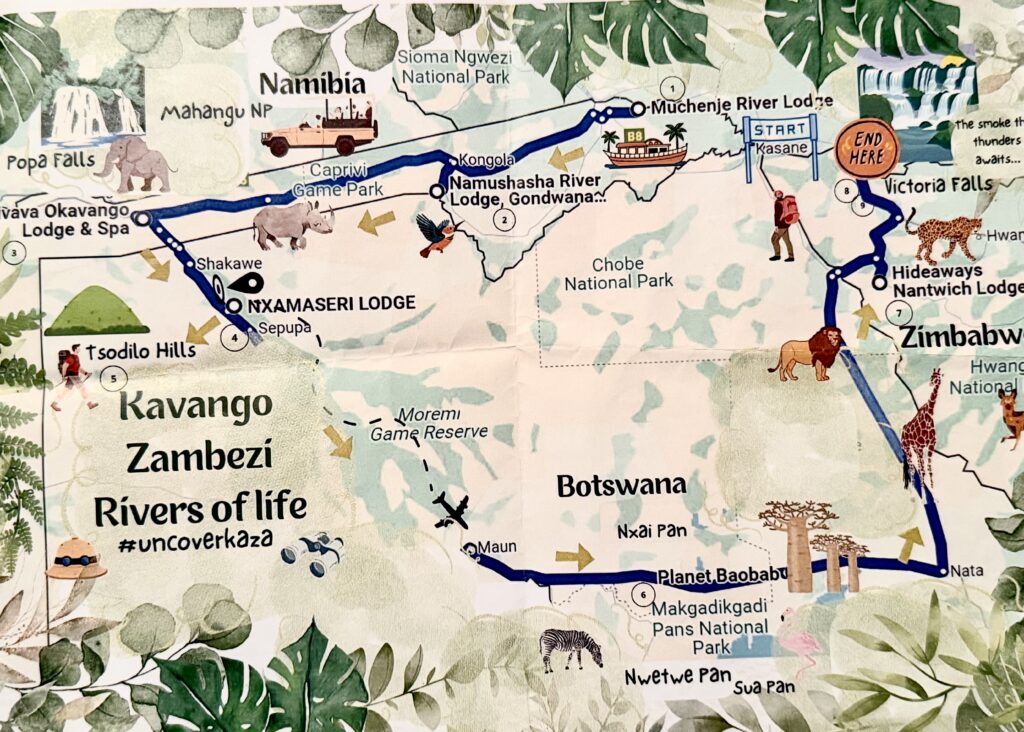
*The map at the head of the page details the geographical area in which the Caprivi Strip, aka Namibia’s newly-named Zambezi region, is found. The author neither has visited nor is in a position to recommend the lodges included on the map, which was given to him by a marketing organisation. He is in the process of compiling a safari through and around this region.